












Here's what US ecommerce & apparel brands selling domestically and into the UK and EU need to know.
The US, EU and UK are each restricting compostable and biodegradable claims on flexible film packaging (e.g., mailers, poly bags, garment bags) between 2026 and 2028.
What's changing
Three of the world's biggest packaging markets have moved, within the last year or so, to shrink where compostable claims will be allowed to apply to packaging like mailers, poly bags and garment bags.
| Market | Regulation | What changes for mailers, poly bags & garment bags | Timeline |
|---|---|---|---|
| EU | Packaging and Packaging Waste Regulation (PPWR, Regulation 2025/40) | Compostable and biodegradable claims are restricted to tea bags, coffee pads and fruit and veg stickers. The regulation is explicit that these formats "should only be used in clearly defined cases," not as a general-purpose format. Ecommerce mailers and garment bags aren't on the list. | Applies from February 2028 |
| UK (England) | Simpler Recycling reforms | Any plastic packaging labelled "compostable" or "biodegradable" is explicitly excluded from both the recycling stream and the food waste stream. Not diverted to a special process, just not collected. | Already in effect |
| US, California | AB 1201 | A product can only be labelled compostable if it qualifies as an allowable input under USDA National Organic Program standards, a bar most PLA and PHA-based compostable films don't clear. | Enforcement pushed from January 2026 to 30 June 2027 (CalRecycle has said no further extensions will go beyond January 2031) |
| US, Washington | State packaging labelling law | Film bags and mailers must carry ASTM D6400 certification, a certifier logo, specific colour coding and minimum-size labelling. Non-compostable bags are banned from using green, beige or brown at all. | Already in force |
Other US states are following the same playbook: tighter definitions, harder-to-meet criteria, real penalties for getting it wrong.
Why ecommerce and apparel packaging is an exposed category
This isn't a compostable-packaging-in-general story. It's specifically a film packaging story, and that's exactly the format ecommerce mailers, poly bags and garment bags are.
Industrial composting facilities that will accept flexible film packaging are rare even where they exist, and most reject it outright because it contaminates their feedstock and can slow the process down. Home composting is also becoming less common as local governing bodies implement collection bins for food and garden waste and compostable packaging is not permitted in them. So a 'compostable' mailer very often ends up in landfill or incineration regardless of the label, which is precisely the gap regulators are now closing and litigators are now targeting.
What to plan for, not just react to
- Design to the strictest market you touch, not the most permissive one. Retrofitting packaging and reprinting claims after a customer complaint or a compliance notice is far more expensive than getting ahead of it.
- Extended Producer Responsibility (EPR) fee structures are moving in the same direction as the labelling rules. Eco-modulation (discounted EPR fees) increasingly rewards recyclability and recycled content and under most EPR schemes, compostable film-based packaging attracts the highest levels of EPR fees.
The more durable & sustainable alternative
This is where recycled content, done properly, has the advantage: it isn't reliant on composting infrastructure that often doesn't exist, and recyclability is the direction every major market's EPR and labelling framework is actually rewarding right now.
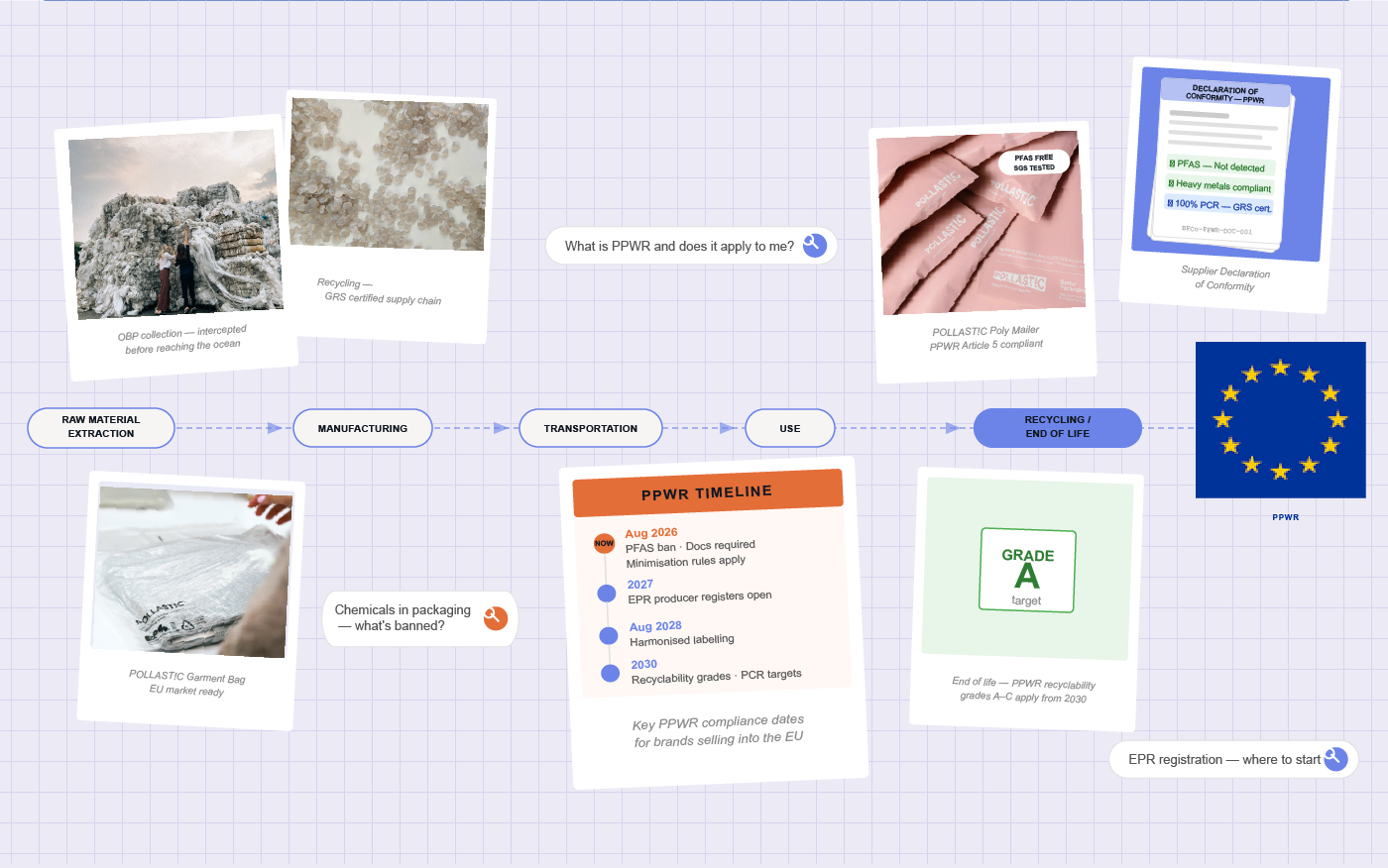
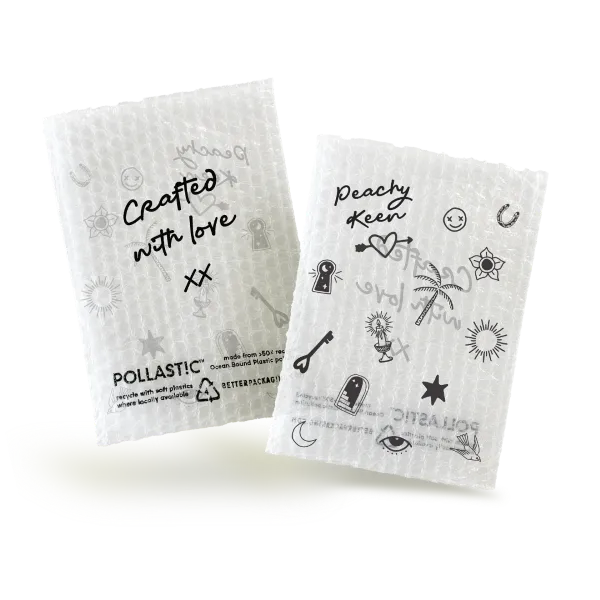
POLLAST!C is our recycled Ocean Bound Plastic material, and it's built for exactly this shift. It's 100% Post Consumer Recycled (PCR) plastic intercepted before it reaches the ocean. It’s certified Ocean Bound Plastic (OBP) by Zero Plastic Oceans and its PCR content is certified by Global Recycled Standard (GRS). These bags can be substituted for your existing mailers, satchels, poly bags and garment bags with zero operational disruption, no redesign of your packing process, no retraining your warehouse team, same specs your 3PL already knows how to handle.
It's also, in most cases, it’s the more cost-effective path – a POLLAST!C bag will cost less than one the same size made from compostable film. And because recyclability is what's actually being rewarded under eco-modulated EPR schemes in the markets that charge them, POLLAST!C is generally better positioned on ongoing compliance fees too, not just the up-front unit cost. Worth running the actual numbers for your volumes and markets rather than taking our word for it, and we're glad to do that comparison with you.
FAQs
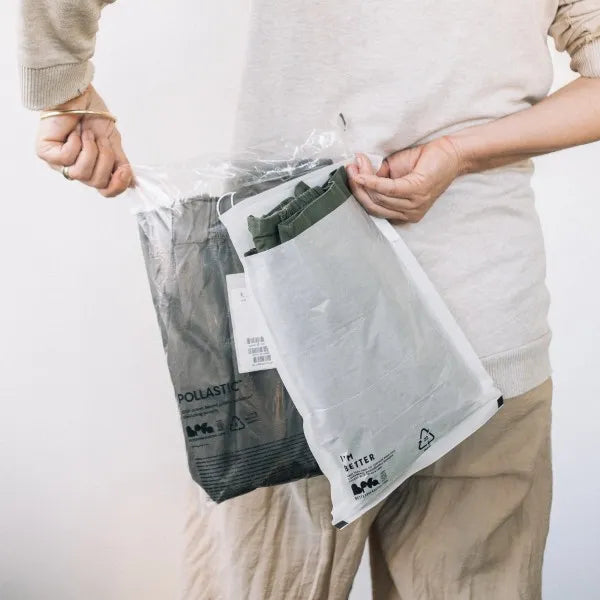
Is compostable packaging being banned? Not outright, anywhere, yet. What's happening is narrower: regulators are shrinking it down to a handful of approved uses (tea bags, coffee pads, produce stickers under the EU's PPWR) rather than treating it as a general-purpose packaging format, and some markets, like the UK, now exclude it from collection entirely.
What's the difference between industrially compostable and home compostable? Industrially compostable needs a commercial facility with controlled heat, moisture and microbial activity to break down. Home compostable needs to do the same in a backyard bin, a much harder bar. Few industrial composting facilities will actually accept compostable packaging, so it often ends up in landfill regardless of what the label promises.
Does any of this affect recyclable or recycled content packaging? No, and that's the point. What's tightening is specifically compostable and biodegradable claims. Recyclability and recycled content are the direction regulation and EPR fee structures are actually rewarding, not restricting.
We've already got compostable packaging in market. What should we do? Begin phasing it out and make sure that by 30 June 2027, your packaging doesn't have any mention of compostability or biodegradability on it, not even a compostability certification!
Is POLLAST!C recyclable everywhere? It's LDPE-based recycled Ocean Bound Plastic (RIC #4), a widely recognised category, though actual collection access still varies by council and country. Talk to us about labelling for your specific markets, it's exactly the kind of detail we keep across so you don't have to.
How is POLLAST!C different from a bioplastic? Bioplastics like PBAT, PLA and PHA are designed to break down under specific composting conditions. POLLAST!C is made from 100% recycled, certified Ocean Bound Plastic, plastic that already exists and was heading for the ocean. It removes plastic from circulation rather than adding new material that depends on infrastructure most places don't have.
Will switching to POLLAST!C disrupt our current packaging setup? No, that's deliberate. It's made as a drop-in replacement for the mailers, satchels, poly bags and garment bags you're already using; same specs, same 3PL handling, no redesign required.
If 'compostable' has been doing the heavy lifting in your sustainability story now's the time to have a plan B ready before a regulator, a court, or a customer forces the conversation.
Last Updated: 7 September 2026